Alan de Herrera
Freelance writer & photojournalist
End of an Era
VX-31 Retires Harrier Fleet After Decades of Testing
Hook Magazine (Tailhook Association) &
Military Times
Story and photos by Alan De Herrera
December, 2024
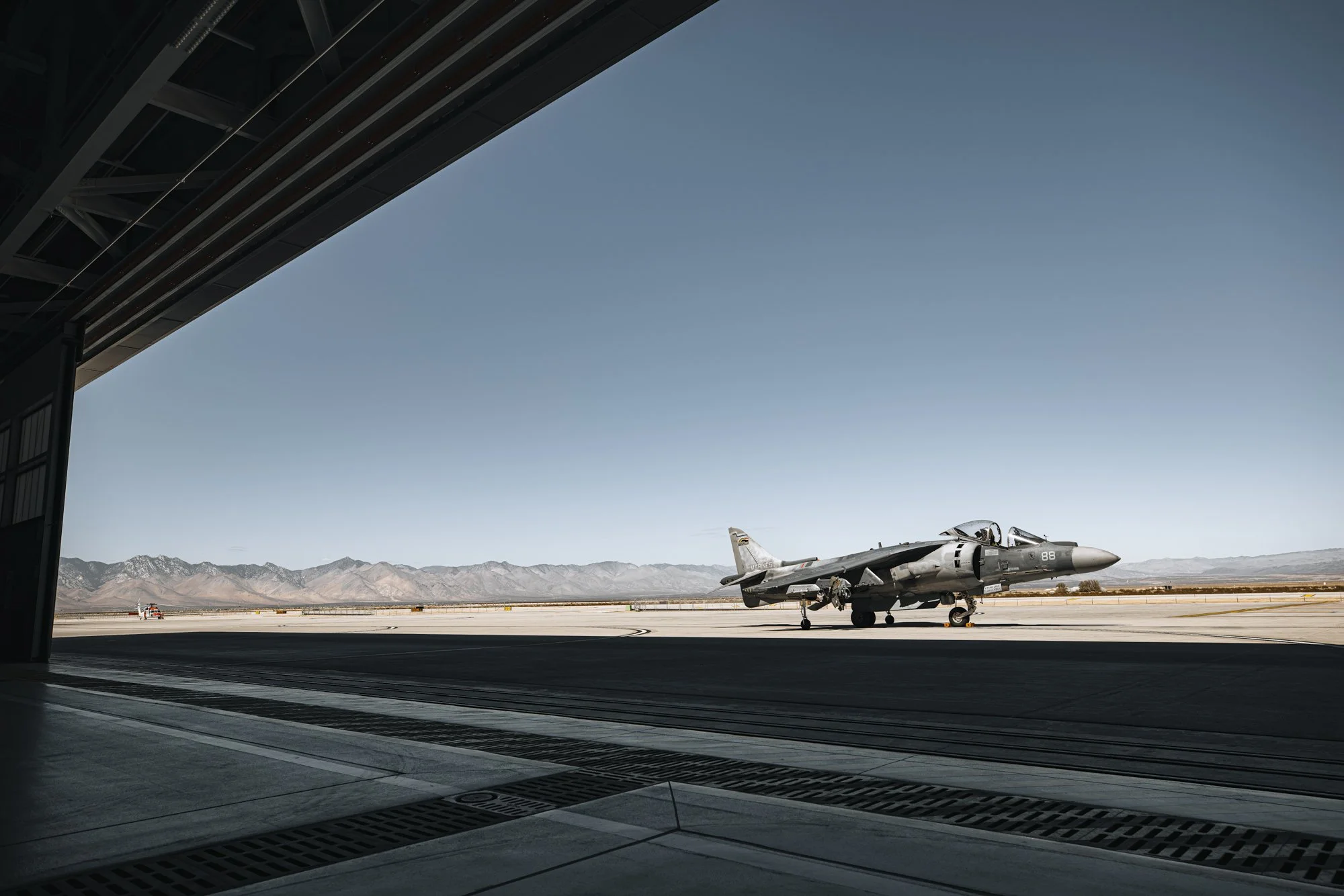
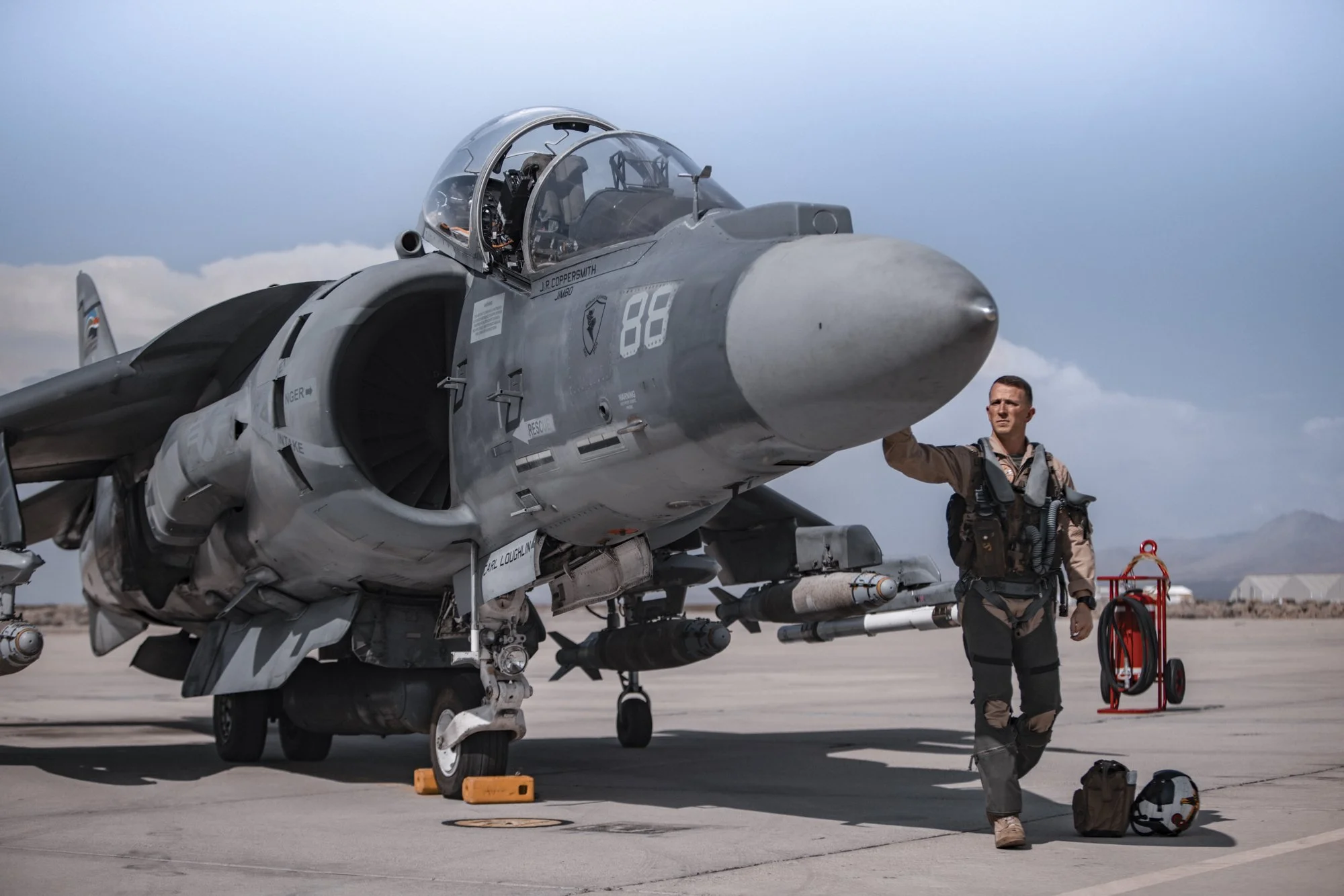
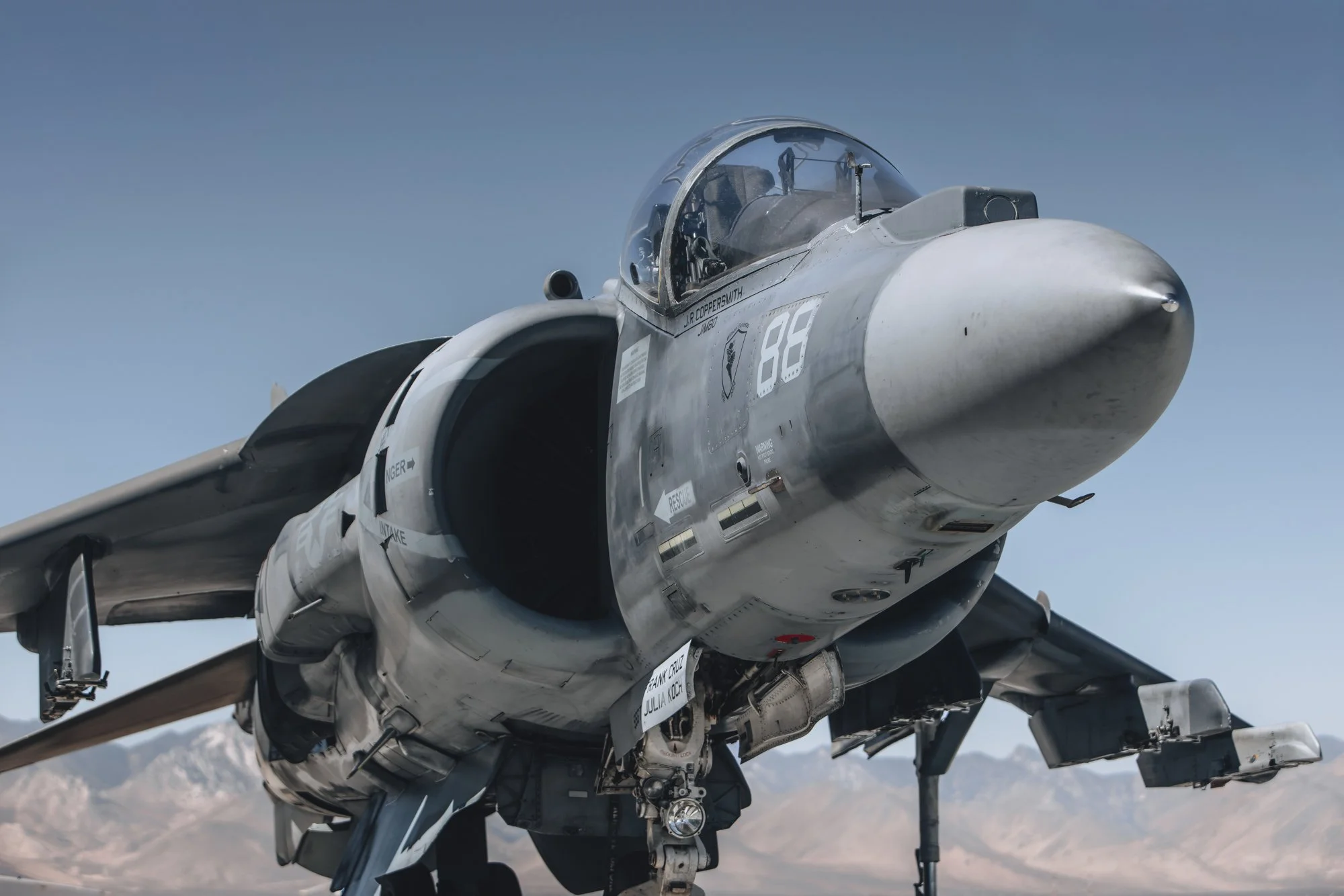
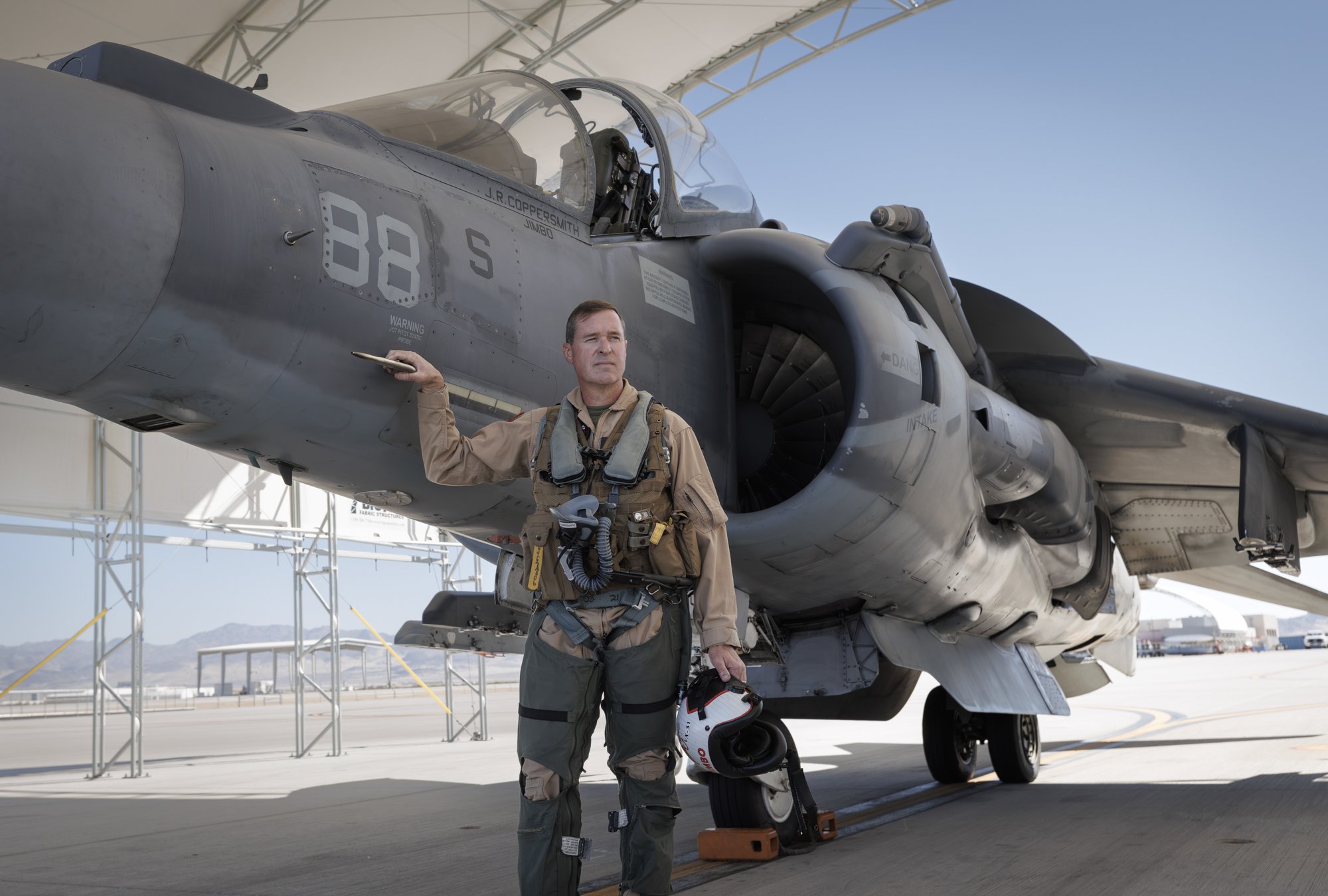
The warm desert wind blew softly from the southwest as VX-31 Dust Devils’ pilot, James “Jimbo” Coppersmith, climbed into the cockpit of his AV-8B Harrier II for one last sortie—closing the final chapter on the squadron’s four decades of AV-8B Harrier development history.
This was more than just a final flight—this was the end of an era, woven into the Harrier’s iconic 54-year legacy. For Coppersmith, it was also the end of a 29-year career, accumulating 2,130 hours at the controls of the notorious jump jet—a machine as unforgiving as it is iconic.
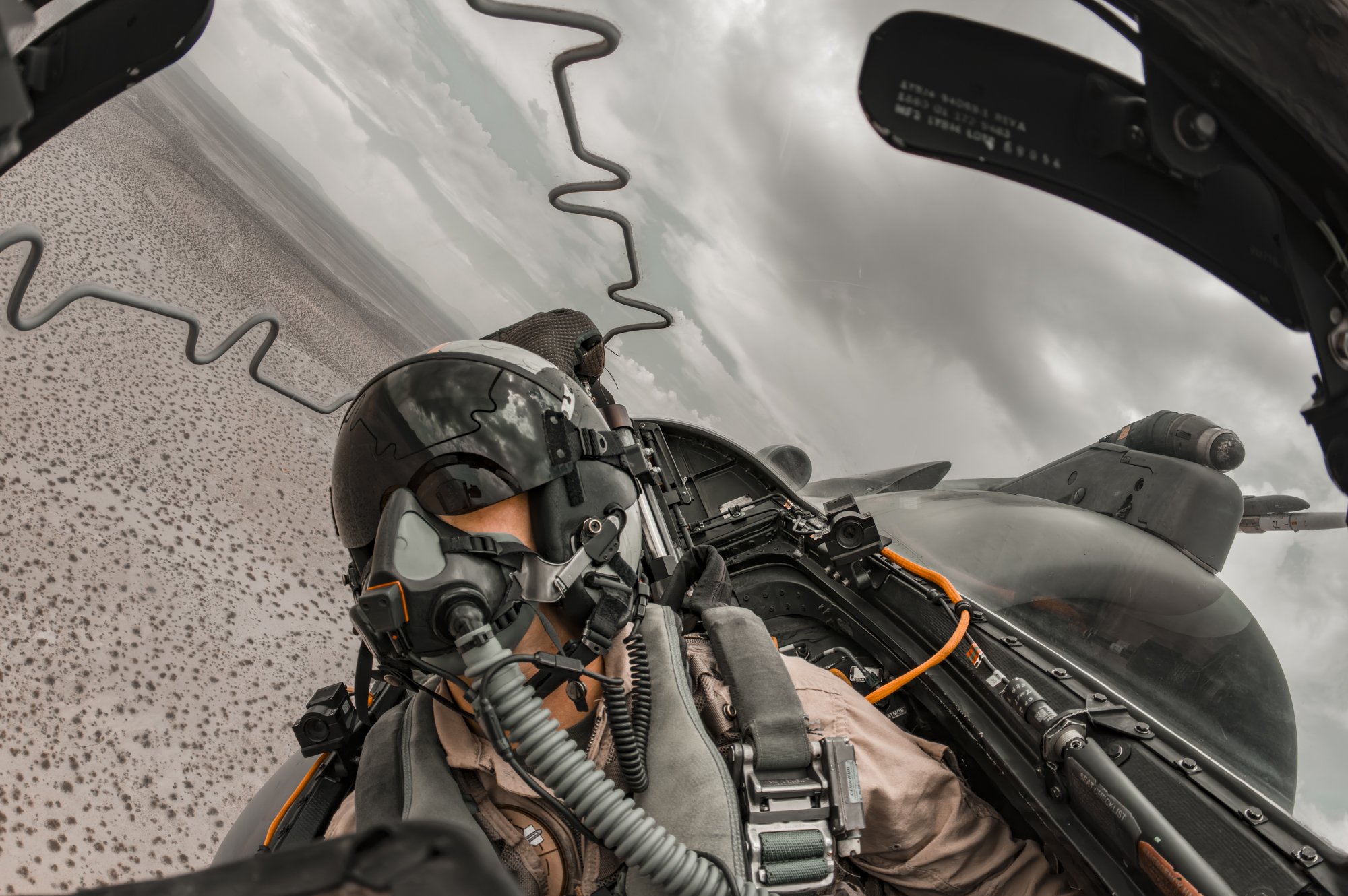
The Pegasus engine screamed behind his canopy like a howling beast as he ran up the RPMs on Harrier 88, squatted low and menacing at the edge of China Lake’s 7,700-foot runway. His eyes scanned the gauges that had guided him through countless flights, each instrument a map of battles fought and lessons learned. His right hand gripped the control stick, muscle memory guiding every move. His eyes traced every dial and readout.
Through the large bubble canopy, the Mojave shimmered in the morning light. Inside, Coppersmith felt the old, unspoken bond between himself and the machine he nicknamed “Christine.” This wasn’t just another hop into the blue. This was the last ride—the last nibble on the razor’s edge.
The radio crackled. “Coso 88, cleared for takeoff…”
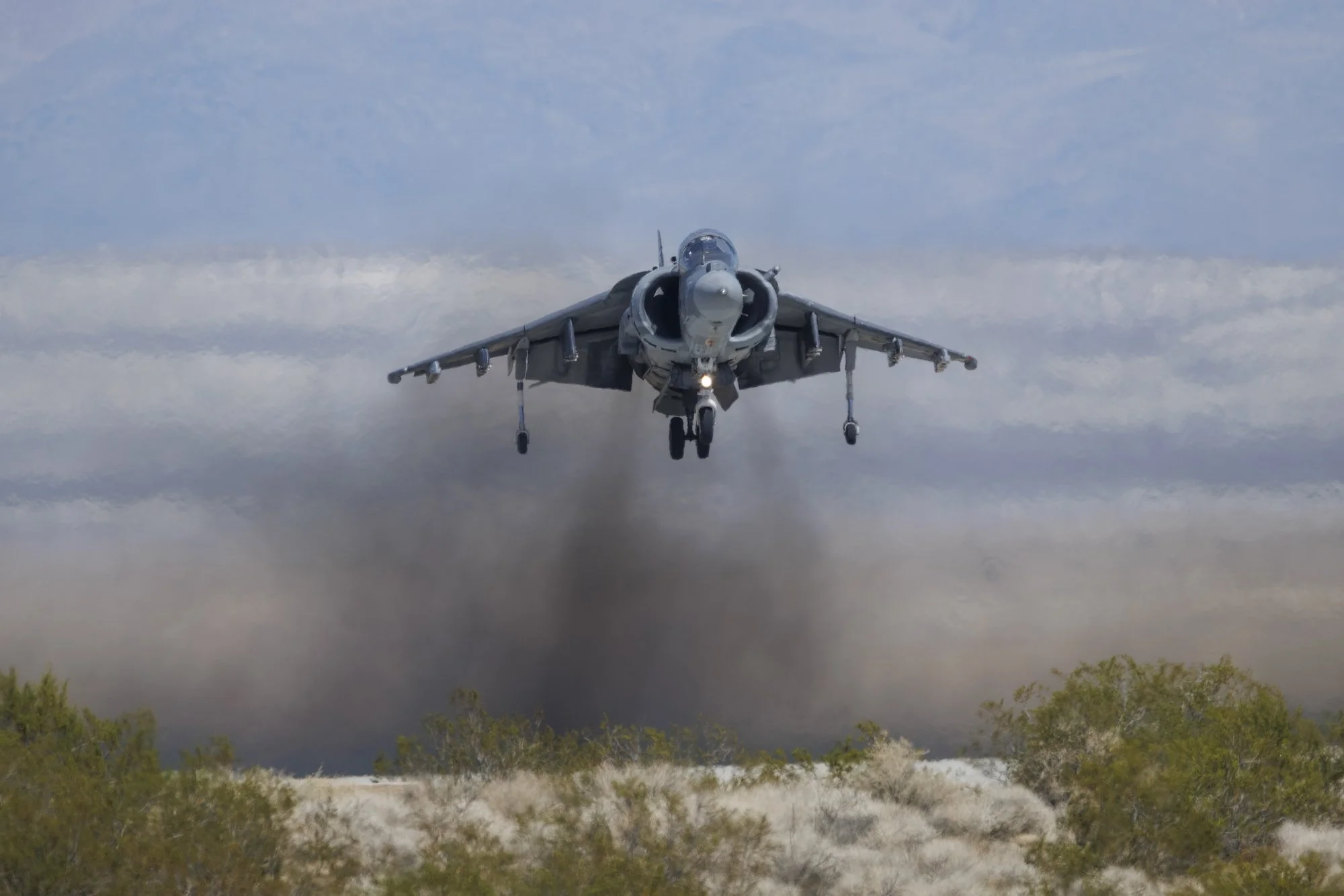
He slammed the throttle forward to full thrust. Off the brakes. A loud burst of dirty thunder ripped across the desert, the Rolls-Royce Pegasus engine wailed like a banshee, knocking him back into his seat. A deafening roar filled the cockpit as the Harrier blasted down the runway, the jet wash searing the desert scrub.
The ground rumbled, shaking the cockpit and rattling his helmet, drowning out memory, fear, and reason, everything but the mission ahead. Every control input was a negotiation with chaos—rudder, stick, throttle. At 850 feet, he yanked the nozzle lever and felt the 23,000 pounds of vectored thrust quickly lift him off the ground as the Harrier clawed its way into the California sky.
The AV-8 Harrier: stocky, short-winged, single-seat, single-turbofan engine—a light-attack brawler with a storied reputation of being dangerous. Bombs slung low, a 25mm cannon in its belly. It was a crazy idea that broke conventions, an audacious challenge hurled at the laws of physics and the staid minds of aviation orthodoxy.
Originally engineered by the United Kingdom in the 1960s, the Harrier was all straightforward, mechanical controls—no computers, no fly-by-wire. A pilot’s airplane: linkages, chains, and cables. Pure stick-and-rudder flying. The kind of machine that didn’t forgive mistakes—it punished them. “It’s a really hard jet to master,” said retired pilot Ben “Lawman” Hancock. “You had to have a very smart left hand—because that hand controlled the throttle, the power, and the nozzles.”
“The Harrier was the genesis of Marine Corps TacAir aviation,” former pilot Frank “Chomps” Zastoupil explained. “You were able to take off vertically and land on short runways. Even in the tree lines and grass fields.” “The Harrier is the ultimate example of flexible basing,” former pilot Derek “Loob” Mills told me. “Boats, grass, dirt, parking lots, soccer stadiums… they all looked like viable options to a jump jet pilot.”
The Marines took the original British oddball, hacked and hardened it, then launched it from forward operating bases near the front lines and the stubby decks of amphibious assault ships near the shore—making the Harrier a cornerstone of the Marine Corps aviation’s most sacred mission: close air support.
“There’s one word that describes the CAS mission,” former Harrier pilot Jack “Blaster” Brown told me. “‘Righteous.’ You went lower, released lower. You exposed yourself because you were consciously connected to those guys on the ground.”
Zastoupil continued, “To have been that good at close air support, to have been that talented at that mission set—supporting the ground forces—that was the key to the Harrier ethos.” Desert Storm. The war in Iraq and Afghanistan. Syria. These were battlefields where the CAS mission wasn’t just a tactic; it was a lifeline. When the world went to hell and the enemy closed in, the forward air controller’s voice crackled over the radio: “Where are the Harriers?”—not a question, but a prayer.
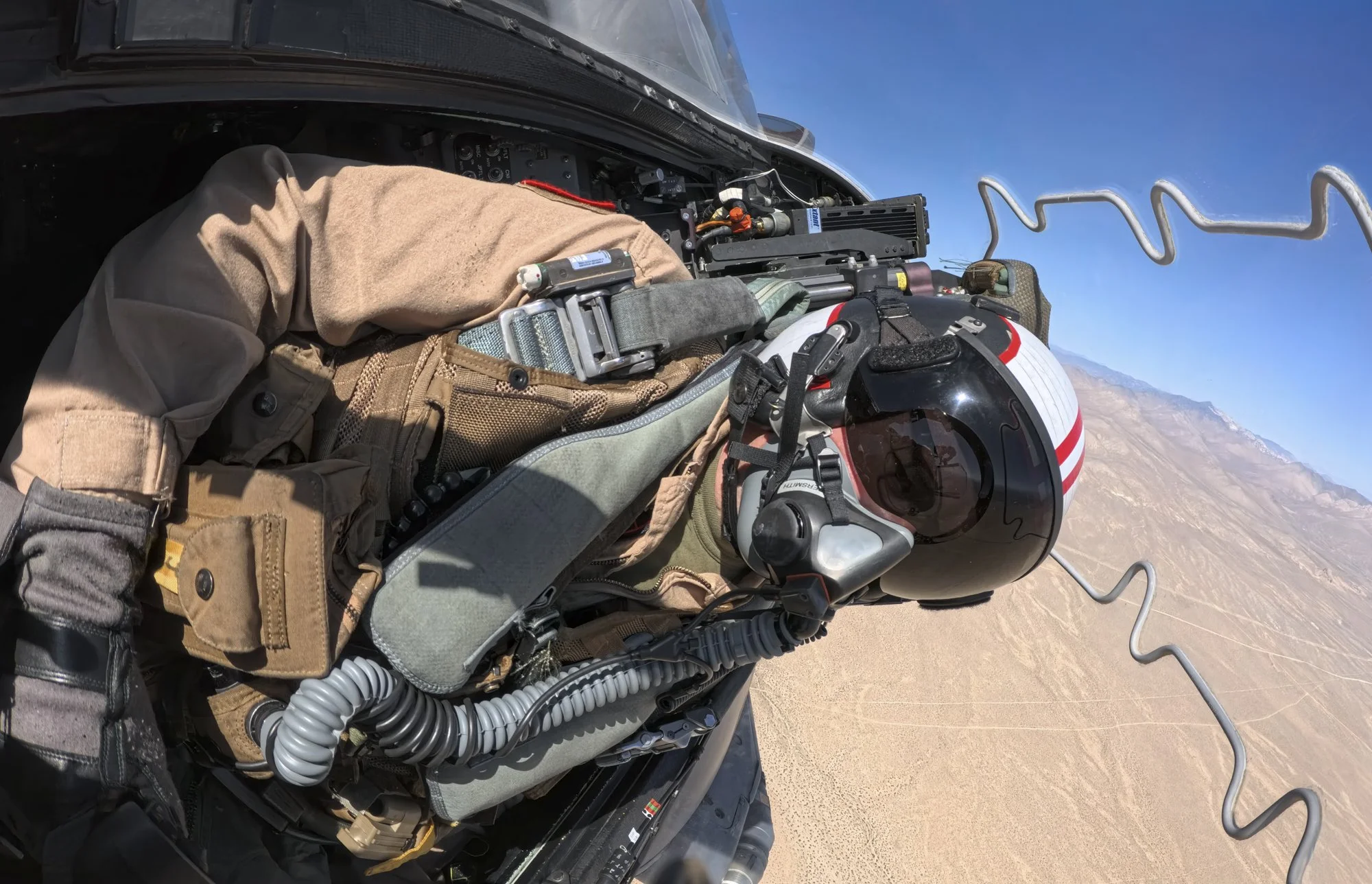
The Harrier didn’t own the sky—it owned the dirt, the grit, the fight. It wasn’t love; it was respect, hard and raw, for the Attack Pilots who wrangled this beast and made the impossible look routine. Every time a Devil Dog strapped into a Harrier, they weren’t just flying. “You were taming the dragon,” Zastoupil said. “It took extremely talented pilots to fly it.”
The VX-31 Dust Devils have served as the operational test bed for the AV-8B Harrier’s evolution—driving innovation, developing new capabilities, and supporting the fleet and allied forces with advanced weapons, sensors, pods, and procedures.
By teaming test pilots with software developers, systems engineers, and weapons experts, VX-31 tested everything from flight control logic to laser targeting pods and night vision capability. From full Link 16 integration for the modern battlefield to precision weapons, survivability systems, and even biofuel.
They broke what needed breaking, fixed what needed fixing, and rebuilt everything better. In doing so, they transformed a notoriously challenging jump jet into a safer, more lethal, more reliable combat asset—pushing the Harrier to the edge, then pushing it further.
“Over the years, we’ve continued to add more things, more capabilities,” Flight Test Engineer Tom Crouse observed. “It’s been a nonstop churn of upgrading the Harrier’s systems. It’s one of the last true low-level CAS mission aircraft.”
Flight Test Director Harvey Pierce noted, “The biggest evolution for us was going from analog to digital with the OSCARS program (Open Systems Core Avionics Requirements/Standards). We upgraded the system to integrate newer weapons. We just kept putting more stuff into the
airplane.”
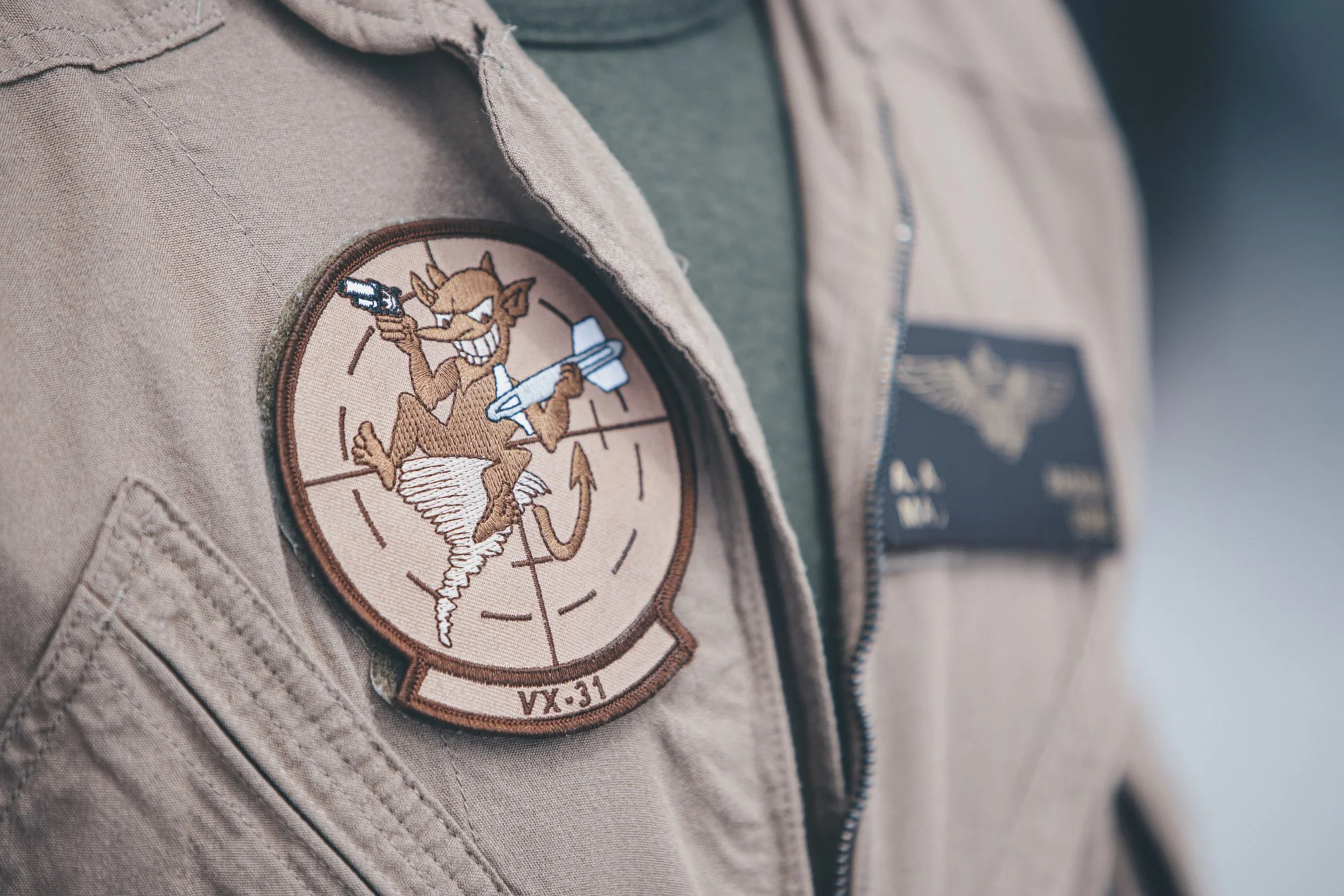
VX-31’s hands-on, code-to-cockpit approach kept the AV-8B Harrier relevant long after its 1985 debut, embodying disciplined experimentation and inventive engineering.
The Harrier’s VSTOL capability to launch and recover from amphibious assault ships in support of littoral operations turned those steel decks into flexible, mobile airfields that could push airpower right up to the shoreline. Nothing about it was routine, though, more like a precision ritual skimming the boundary between control and chaos.
Combat-loaded, you blast off from the swaying decks of the Navy’s amphibious assault ships in just 800 feet—under your own power. Then make a thrust-vectoring vertical landing back on a patch of steel barely wider than its wings. No catapults. No arresting cables to catch a tailhook. Add night operations in rough seas, low on fuel, and you've got the makings of a real nightmare. Coppersmith told me about his time flying off the gator boat: “The flight deck on the LHD is a hazardous place. You were sharing the environment with all the other tilt-rotor aircraft in the composite squadron.”Former pilot Trevor “Havya” Felter told me, “The Harrier was built to be on the boat.”
He explained that the Harrier is only capable of vertical landings when it has a low fuel load and enough water to cool the engine. Achieving a vertical landing requires a thrust-to-weight ratio of at least one-to-one. “You can only hover with under a thousand pounds of fuel,” he said. “You typically get a primary approach, and sometimes a secondary attempt. But if you make a serious mistake out there, it’s usually catastrophic.”
Coppersmith’s last flight in the Harrier was a visceral lap around the high desert he knew so well—a love letter to the Harrier community, written in high-speed, low-level runs over familiar terrain and simulated dive-bomb missions across landmarks outside the NAWS China Lake boundaries, saluting old friends along the way.
An hour later, he returned for the final act: a slow hover, landing gear down, nozzles rotated, the heat shimmering like a mirage as he hung in defiance of gravity itself. The final flight drew veterans, Sailors, Marines, government civilians, industry partners, and family members to the squadron’s flight line.
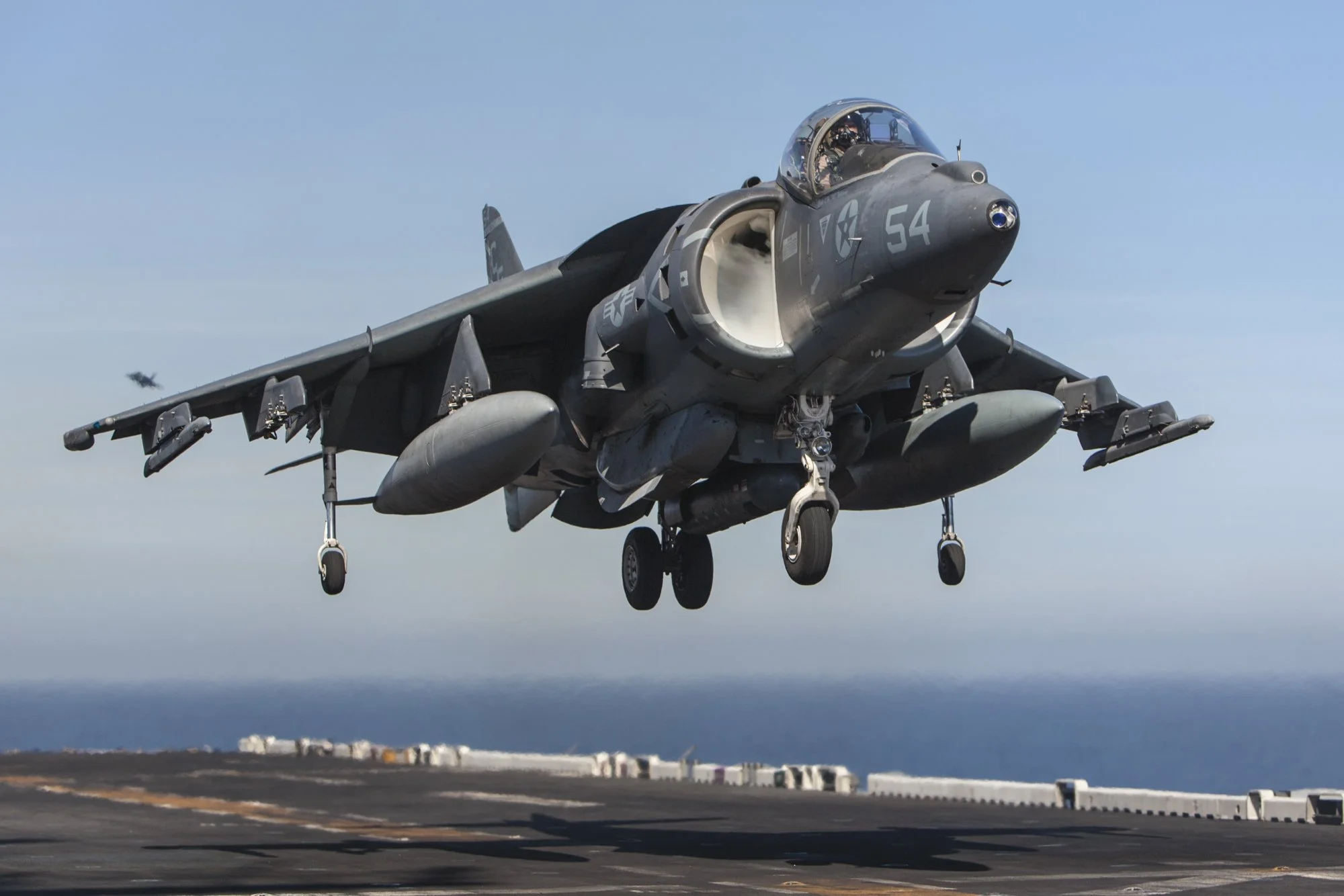
Aligning with the spectators in front of the squadron hangar, Coppersmith slowly decelerated to a steady hover, lifted the nozzles past the hover stop. He dipped the Harrier’s nose twelve degrees, then back in a brief bow—a last farewell for the believers.
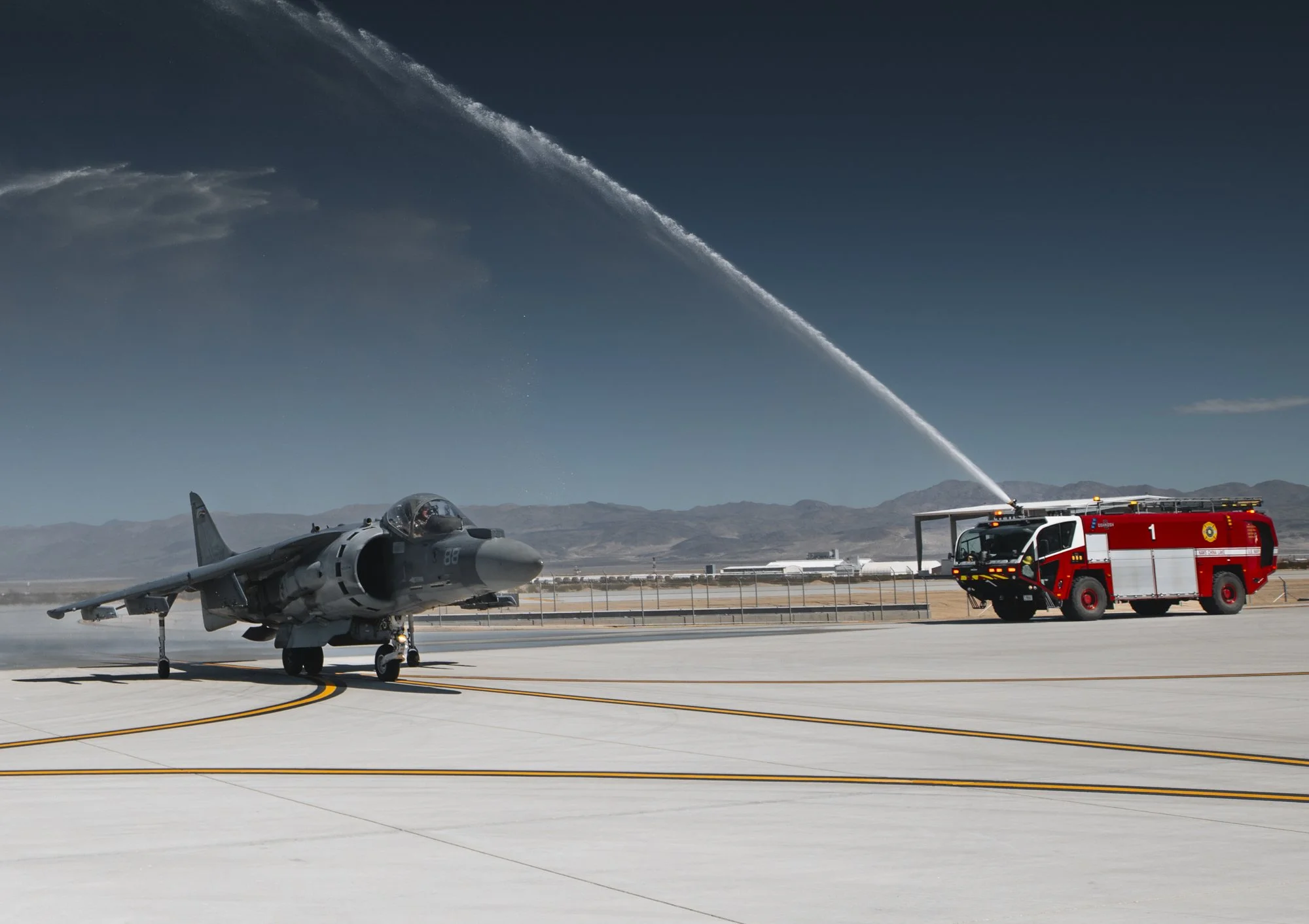
As he taxied back to the VX-31 hangar, two fire engines parked nose-to-nose sent up a proper water salute as he slowly rolled through the arch of mist. Then, as the Pegasus engine spooled down for the last time, silence. Coppersmith climbed out of the cockpit, took a deep breath, and smiled into a wall of cheers and salutes.
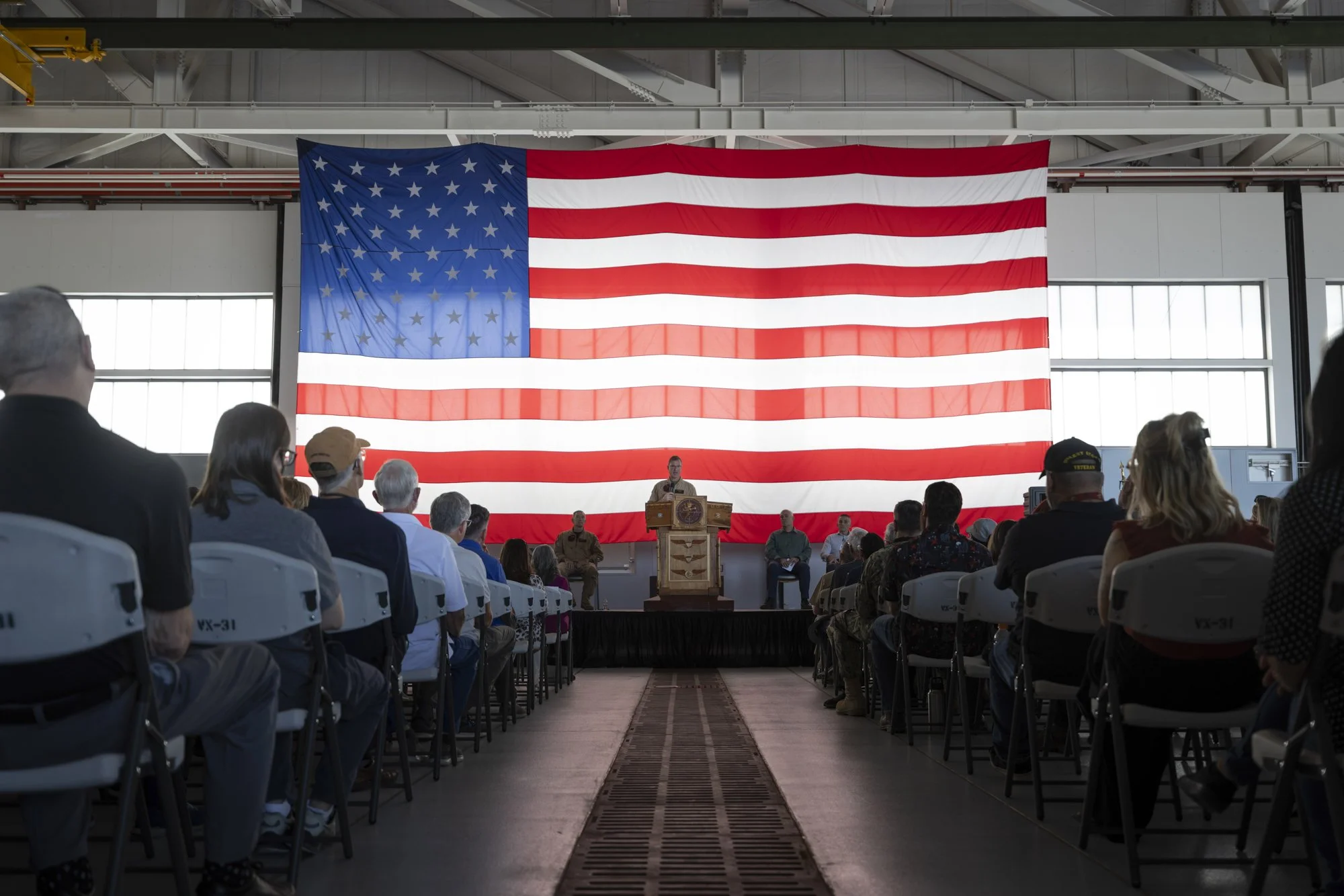
Inside the Dust Devil’s Hangar 6, a massive American flag hung behind the podium. The squadron’s previously retired AV-8B Harrier 82 sat silent in the corner on display, like a retired gladiator. The speeches tried to make sense of it all.
Addressing the audience at the podium, Lt. Col. Timothy “Little Buddy” Burchett, VX-31 Commanding Officer, commended the China Lake team for safely guiding the program to its conclusion. “We did not coast into the finish line. It was a triumphant finish for the team partnership,” Burchett told the crowd. “The Harrier team was true innovators in what we called integrated test—helping get capabilities into the frontline warfighter’s hands faster.”
“Today we completed AV-8B RDT&E flight operations,” said Coppersmith, who was also VX-31’s civilian Technical Director. “The Harrier’s testing life has come to an end, but its
contributions to Marine airpower live on in every aircraft and pilot that follows.”
Underscoring the Harrier’s enduring significance to the Marine Attack mission, Coppersmith stated, “It was the most successful attack aircraft in Marine Corps history. No doubt about it. Pausing for a moment, he then looked at the audience with grave resolve and said, “We lost a lot of great Marines along the way… and we honored each of them with every procedure and material solution that improved the safety and reliability of this aircraft.”
NTWP (Naval Test Wing Pacific) Commodore Capt. David Halpern summarized it best: “The Jump Jet proved that ‘runways optional’ wasn’t a punchline—it was a revolution. The U.S. Marine Corps took that revolution and made it a doctrine. It was a promise to the rifleman: close air support would be there, even when infrastructure wasn’t. And here at China Lake, the Dust Devils wrote vital pages of that story. That was not routine work—that was heritage.”